
Journey Toward the 500th Anniversary of the Apparitions of Our Lady of Guadalupe

Days
Hours
Minutes
Seconds

The People of God journey to the Sacred Heart of Jesus through Mary

Year Theme

2026-2027

Mary,
model of Inculturation of the Gospel

Year Theme

2027-2028

Our Lady of Guadalupe, fountain of peace and unity

Year Theme

2028-2029

Ark of the Covenant Mary Bearer of Christ

Year Theme

2029-2030

Our Lady of Guadalupe leads us to the true God for Whom we live

Year Theme

2030-2031

The Apparitions of Our Lady of Guadalupe

First Apparition
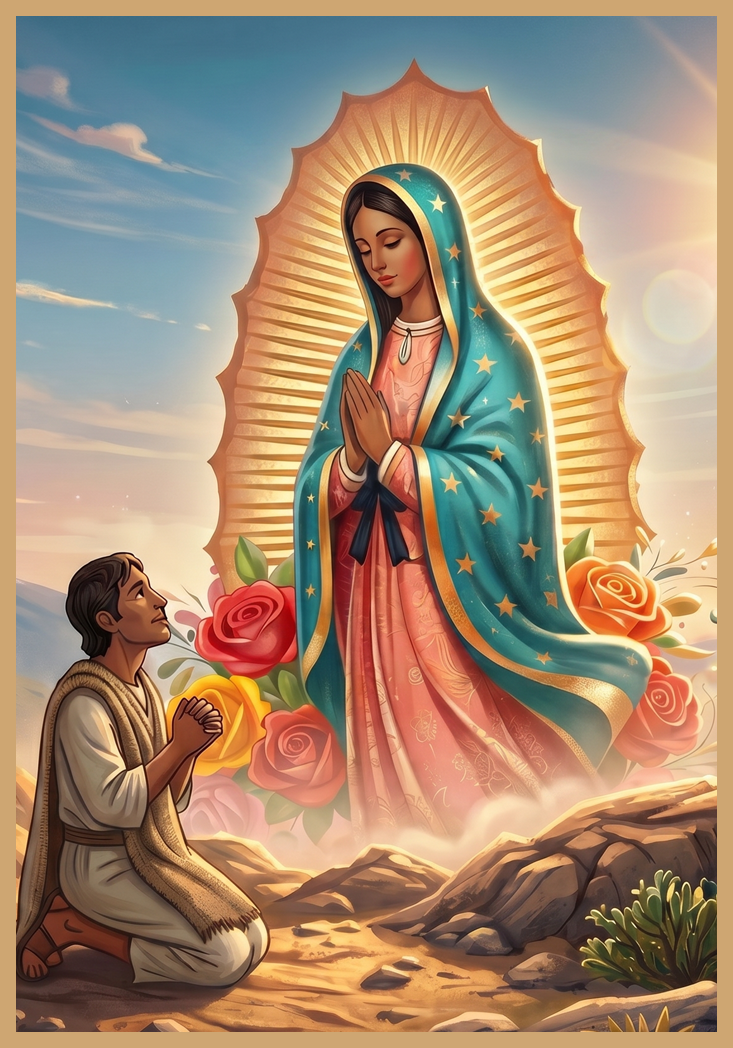
On the morning of December 9, 1531, Juan Diego was traveling to Mass for the Feast of the Immaculate Conception when, near Tepeyac Hill, he heard beautiful music and a voice calling his name. There, the Blessed Virgin Mary appeared to him, radiantly clothed and carrying the Child Jesus. She asked him to visit Bishop Juan de Zumárraga and request the construction of a chapel on Tepeyac Hill, where she wished to reveal God’s love and mercy to all people. Although the bishop received Juan Diego kindly, he remained cautious and asked for time to reflect on the request.


Second Apparition
As Juan Diego returned home, the Virgin Mary appeared to him again. Discouraged by the bishop’s response, he asked her to choose someone more important to deliver the message. However, Our Lady instructed him to return to the bishop and repeat her request.


Third Apparition
On December 10, Juan Diego met with the bishop a second time. The bishop asked for a sign to confirm the authenticity of the message. Later that day, Our Lady appeared again, and Juan Diego informed her of the bishop’s request. She promised to provide a sign the following day.

Juan Diego was unable to meet her on December 11 because he was caring for his uncle, Juan Bernardino, who had become seriously ill. Early on December 12, while hurrying to find a priest for his dying uncle, he took a different route to avoid encountering Our Lady, embarrassed that he had missed their appointment.


Fourth Apparition
Despite his efforts, Our Lady appeared to Juan Diego once more. She reassured him that his uncle had already been healed and instructed him to gather flowers from the top of Tepeyac Hill. Although it was winter and the hill was barren, Juan Diego found beautiful flowers blooming there. He collected them, and the Virgin arranged them in his tilma (cloak).

When Juan Diego presented the flowers to Bishop Zumárraga, he opened his tilma and revealed not only the flowers but also the miraculous image of Our Lady of Guadalupe imprinted on the fabric. The bishop immediately believed the message and ordered the construction of the chapel on Tepeyac Hill.


Fifth Apparition
The final apparition occurred in the home of Juan Diego and his uncle. Our Lady appeared to Juan Bernardino, cured him completely, and identified herself as the Virgin of Guadalupe.

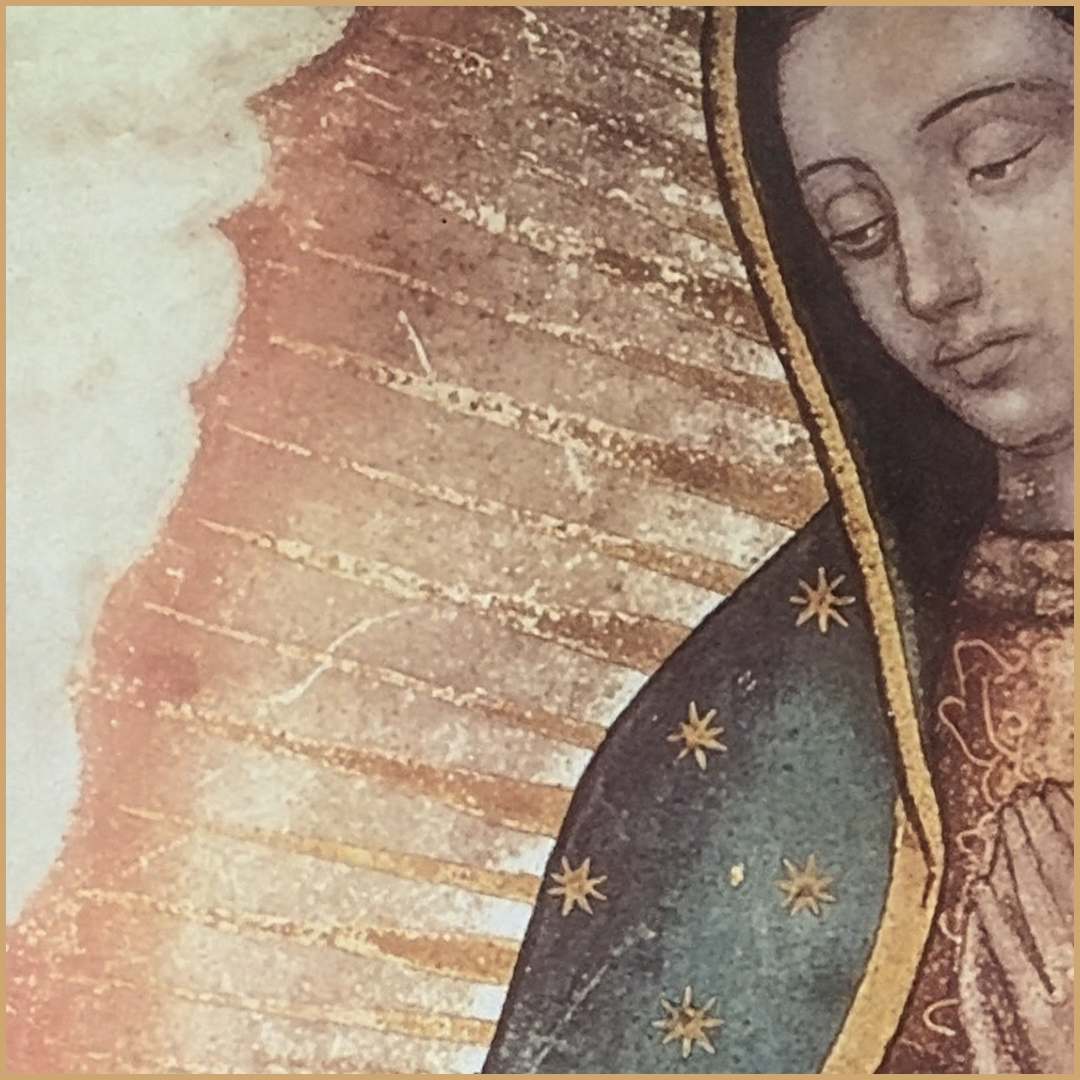
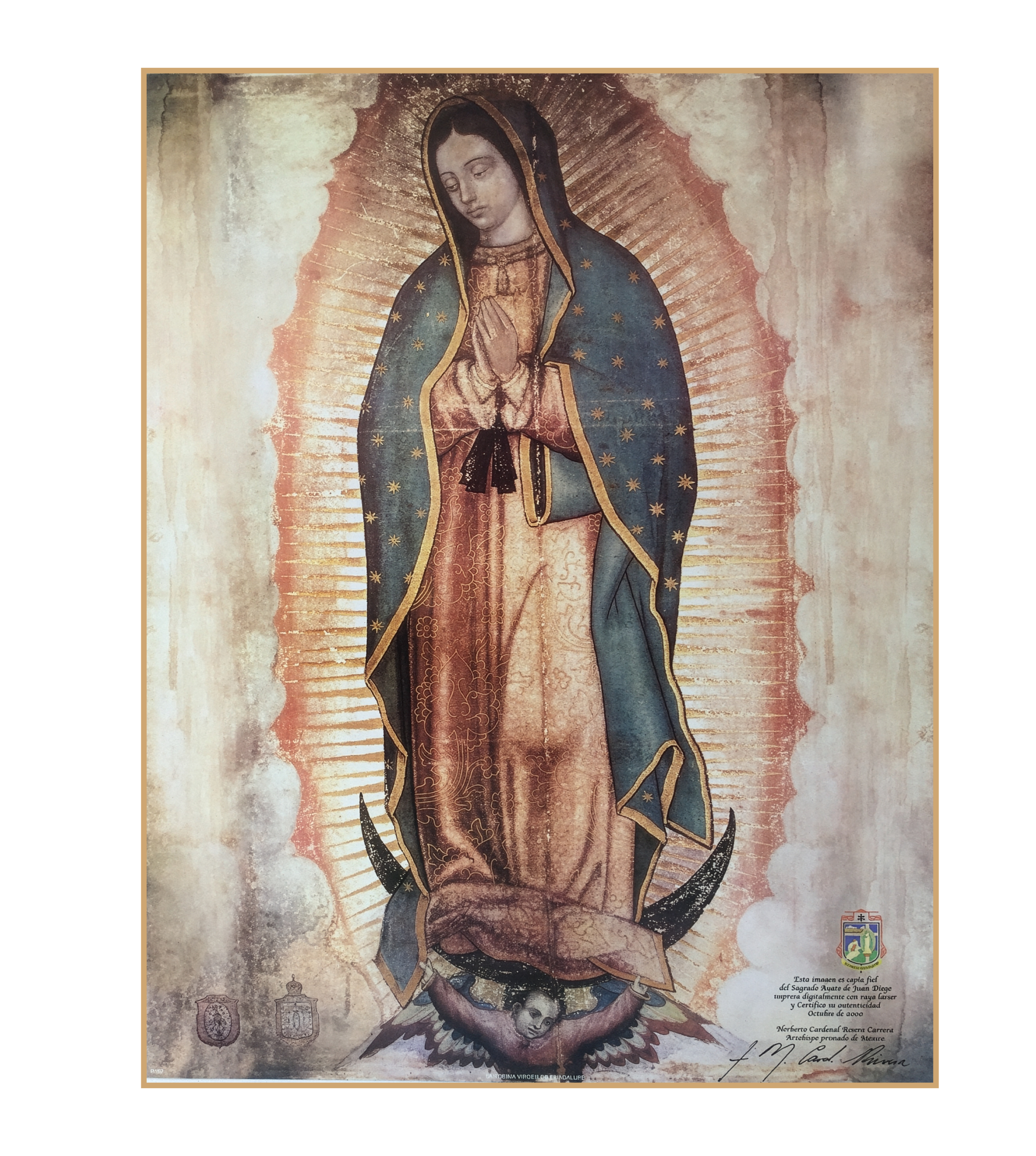
The image of Our Lady of Guadalupe communicates the Catholic faith in a way that the indigenous peoples of Mexico immediately recognized and embraced. The tilma of Saint Juan Diego is filled with profound symbolism, where every color, figure, and detail conveys a spiritual and theological message. Our Lady appears as a mestiza woman, reflecting both Indigenous and Spanish heritage, symbolizing the meeting and unity of these two cultures at a pivotal moment in history.

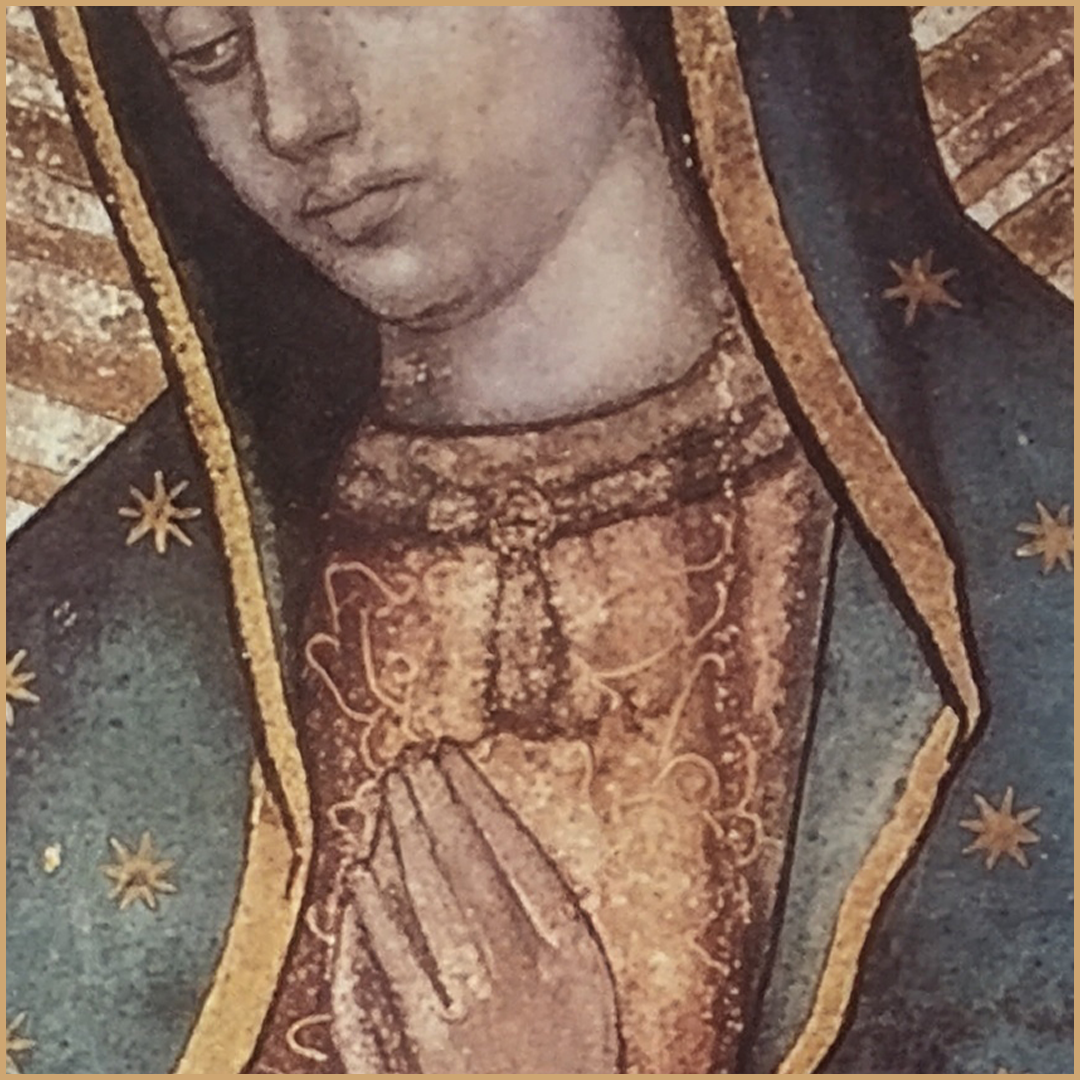
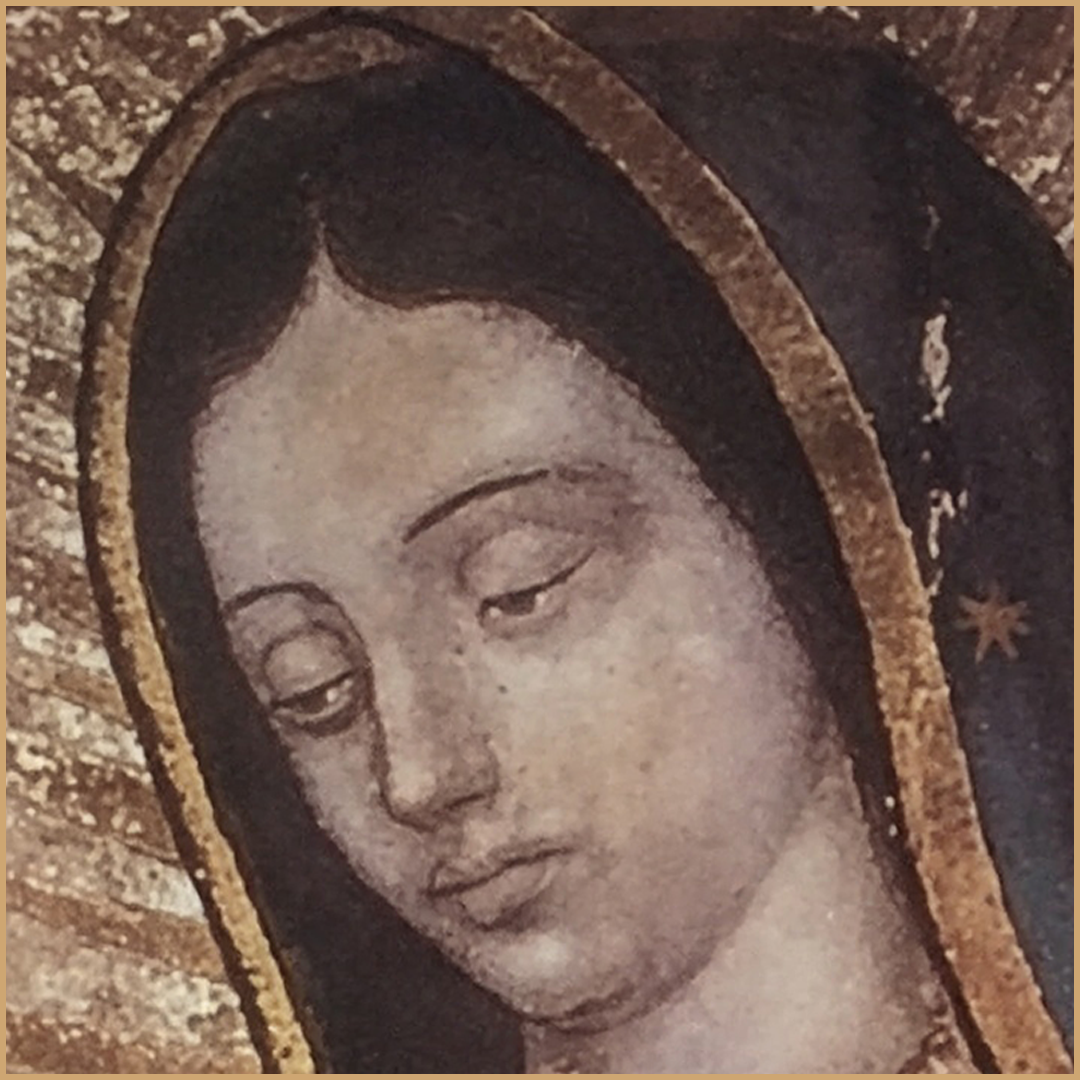
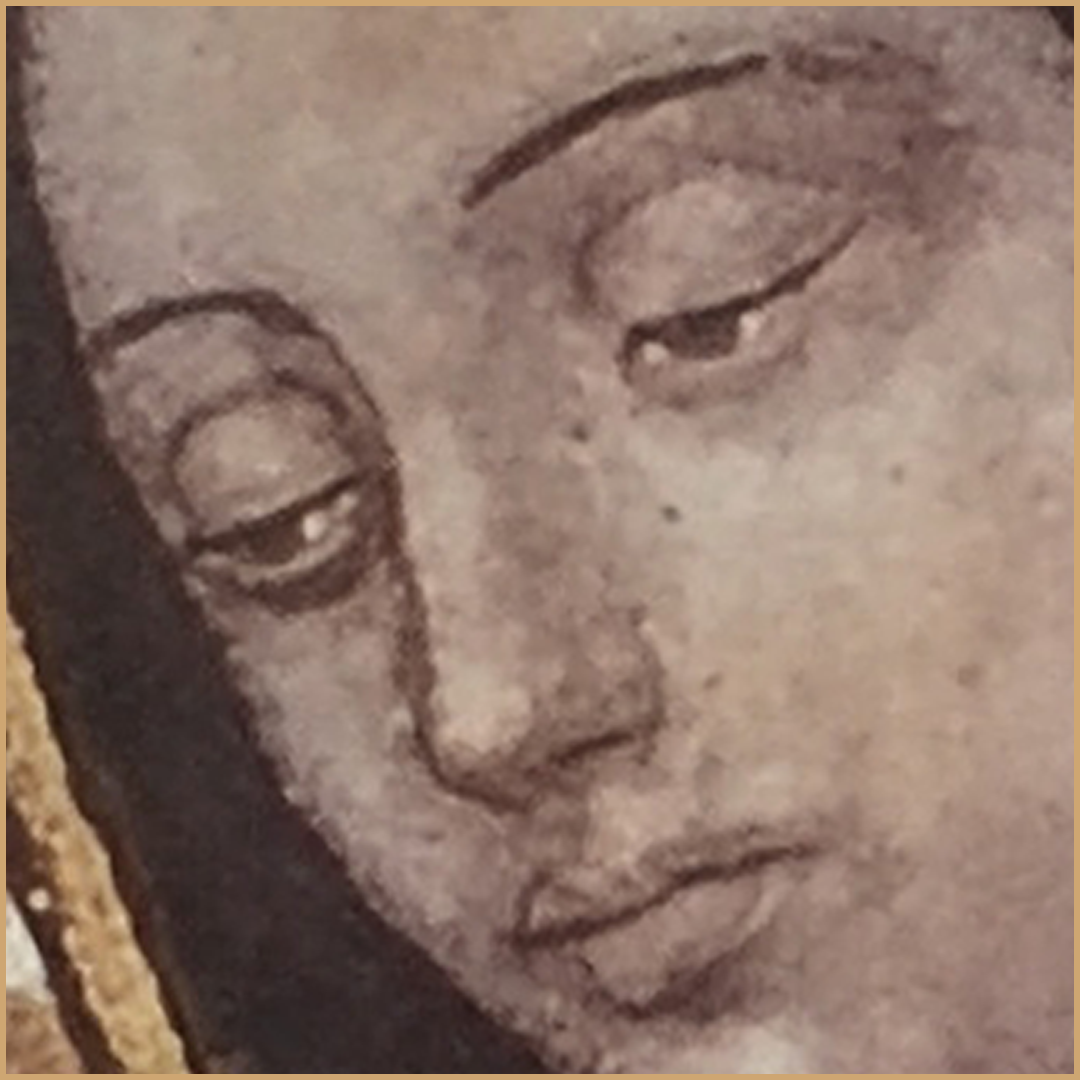
Our Lady's hair, parted in the middle and hanging loosely, indicates she is a virgin maiden.

Scientific analysis has shown reflections of people in the Virgin's eyes, just as any human eye would reflect. There are 13 total figures (including Juan Diego and Bishop Zumarraga) that form two scenes in both eyes.

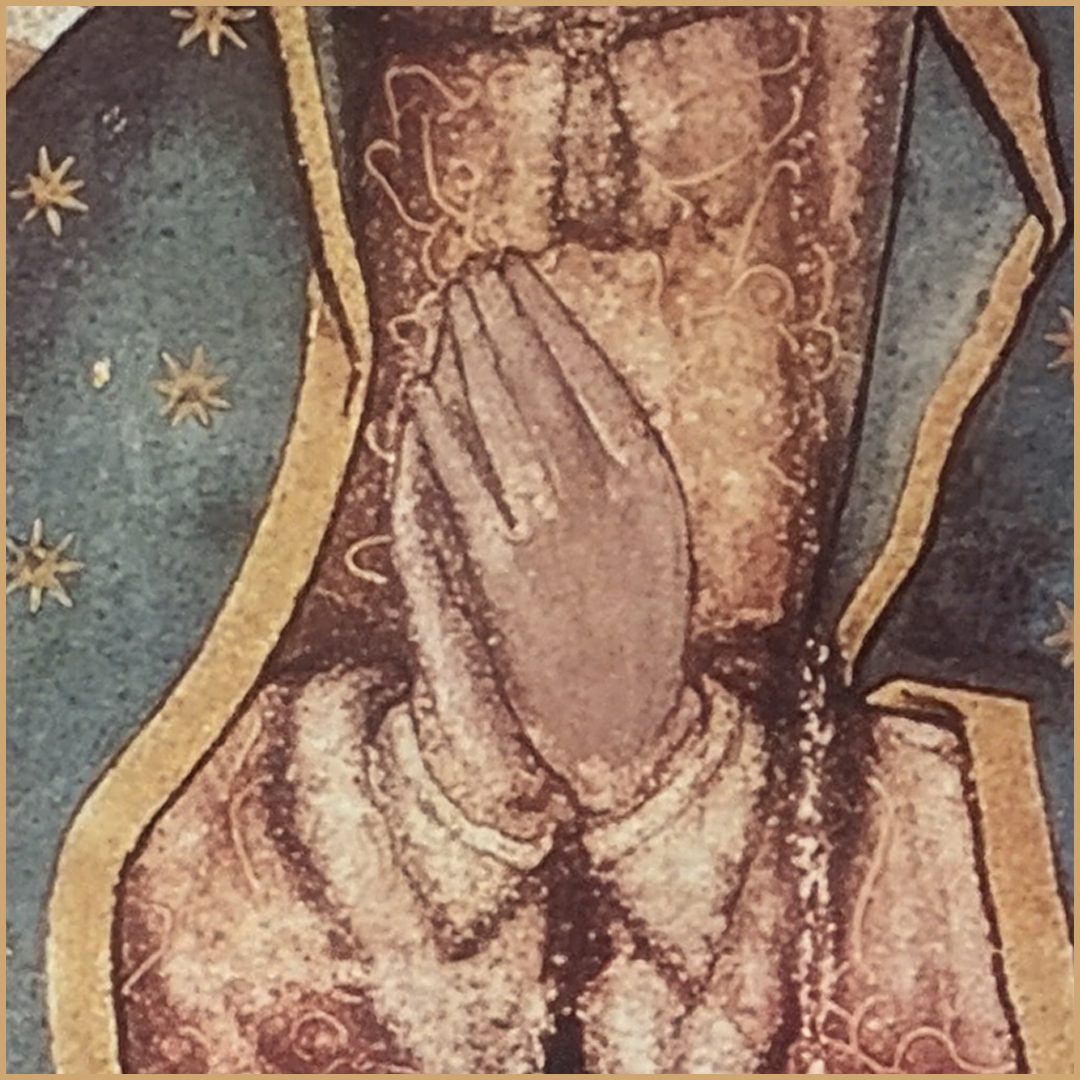
One can see a cross in the center of the medallion that she carries on the upper part of her dress. This manifests her consecration to her Son Jesus, whose cross reminds us of both His total sacrifice for love and the moment when he gives us Mary as our Mother.

The symbol of the Cross was seen on the sails of the Spaniards' ships.

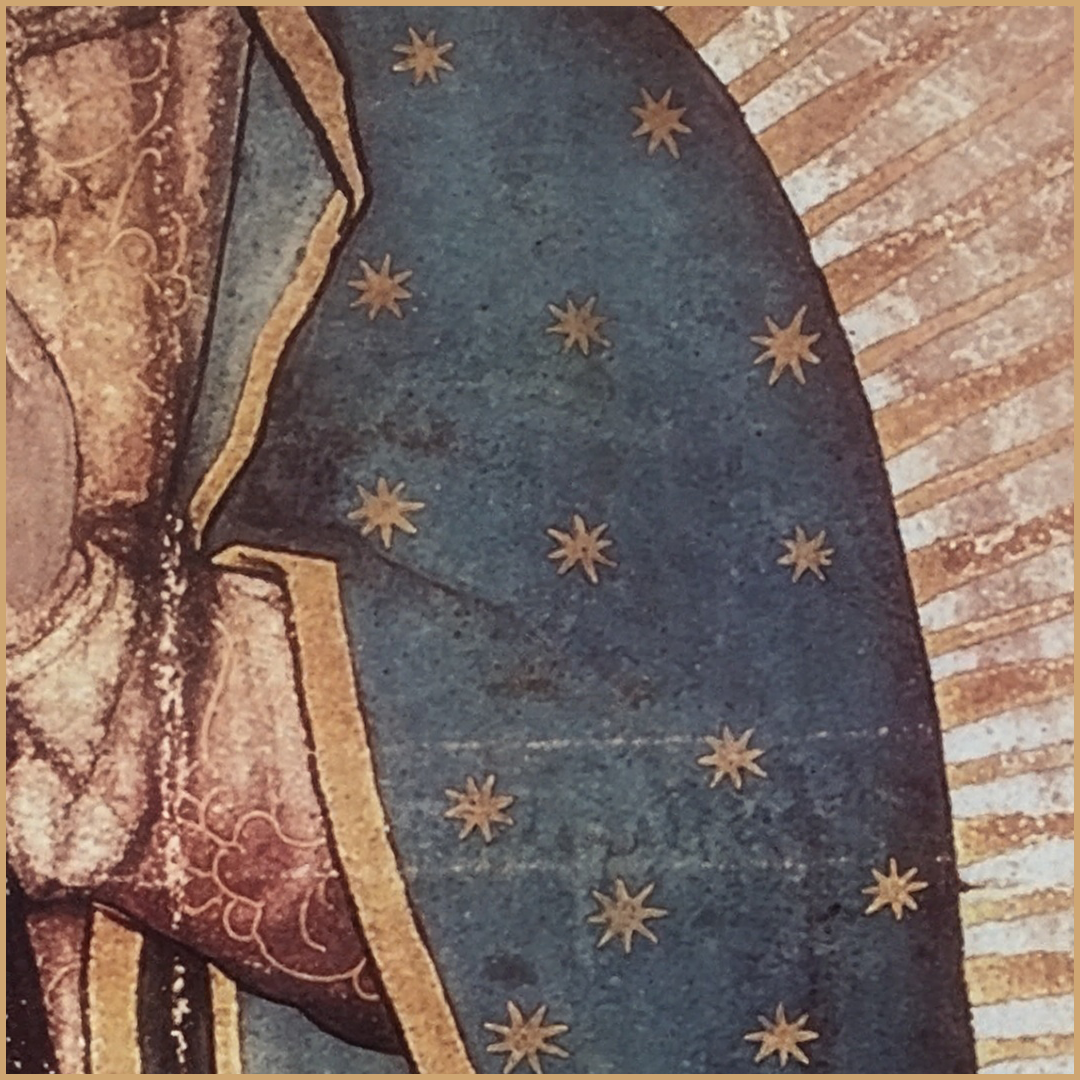
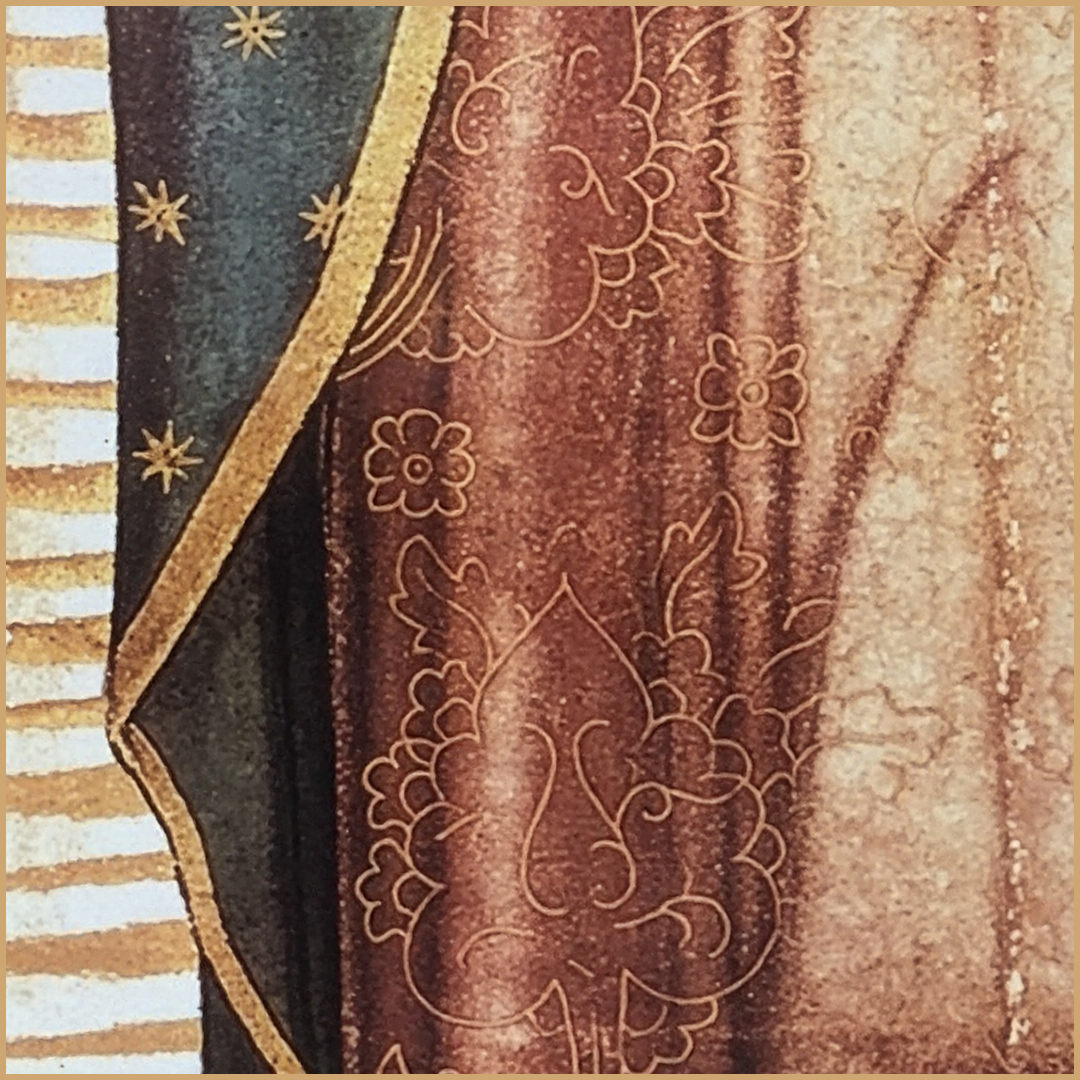
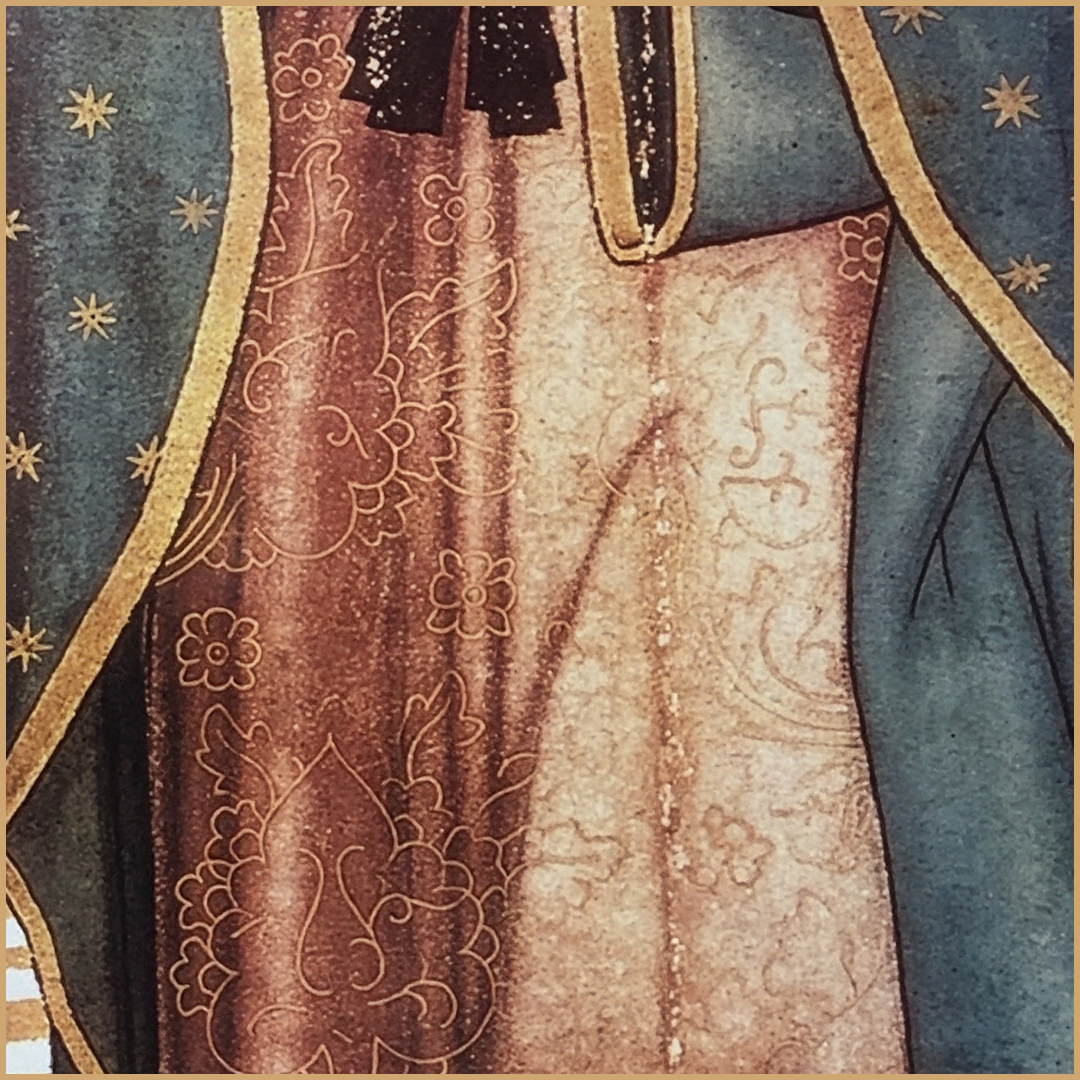
The Virgin's identity as a woman of heaven and earth is affirmed by her garments' colors and decorations: her reddish tunic is the color symbolic of earth, while the star-speckled green-blue mantle symbolizes the heavens. The mantle's color indicates her royalty, since only the Aztec emperors could wear cloaks of that color. The Virgin, Queen of heaven and earth, points us toward the truth that God is love, and mankind is the recipient of His love.

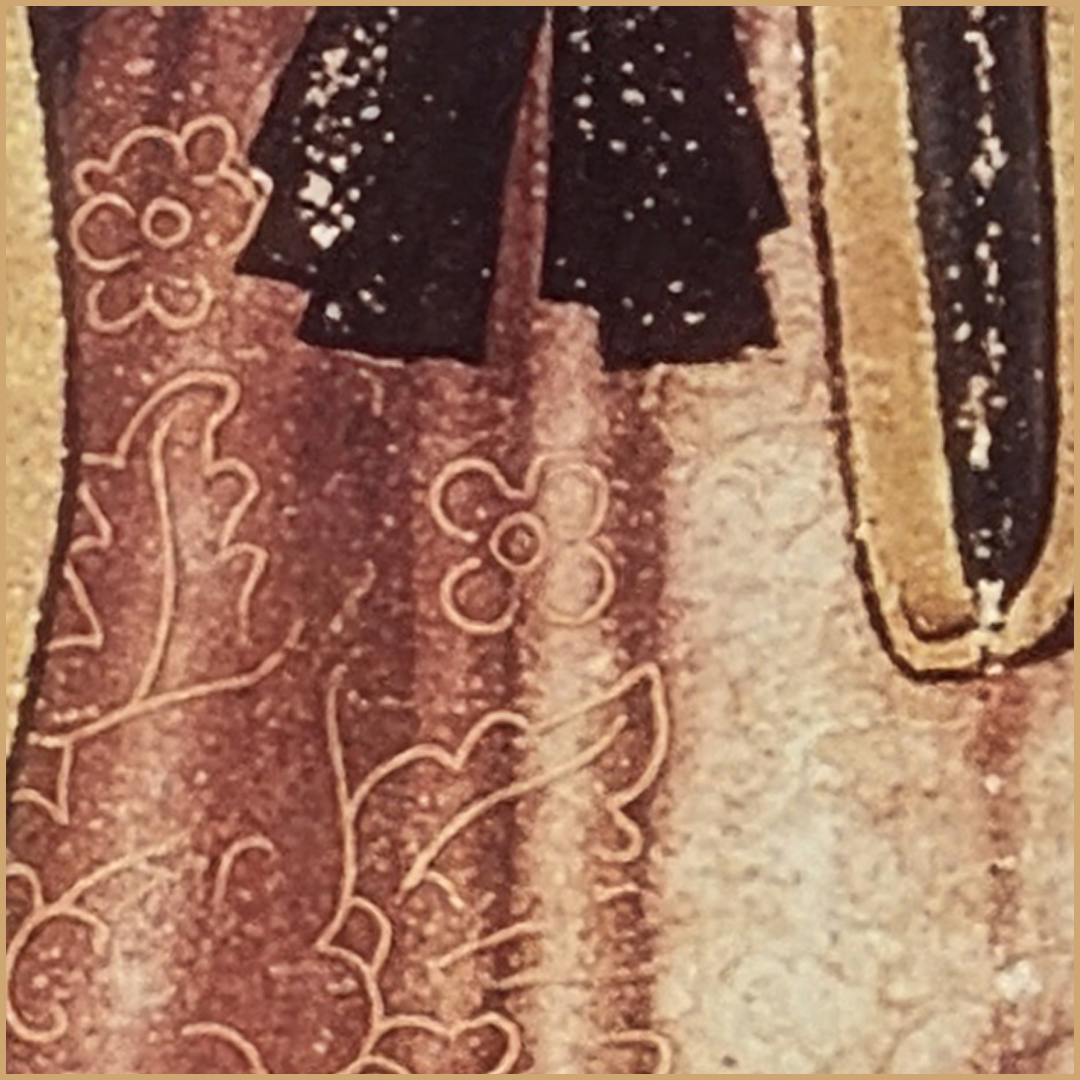
The 8-petaled flowers symbolize the day of new cre­ation. The 'blossom' is in the form of a hill, and the stem is presented as a river. The "hill-water" represented the concept of civilization. The 'hill' represents the highest point of encounter between God and man. Viewed up­side down, the flower/stem takes the form of a heart - source of life, which belongs to and has its origin in God.


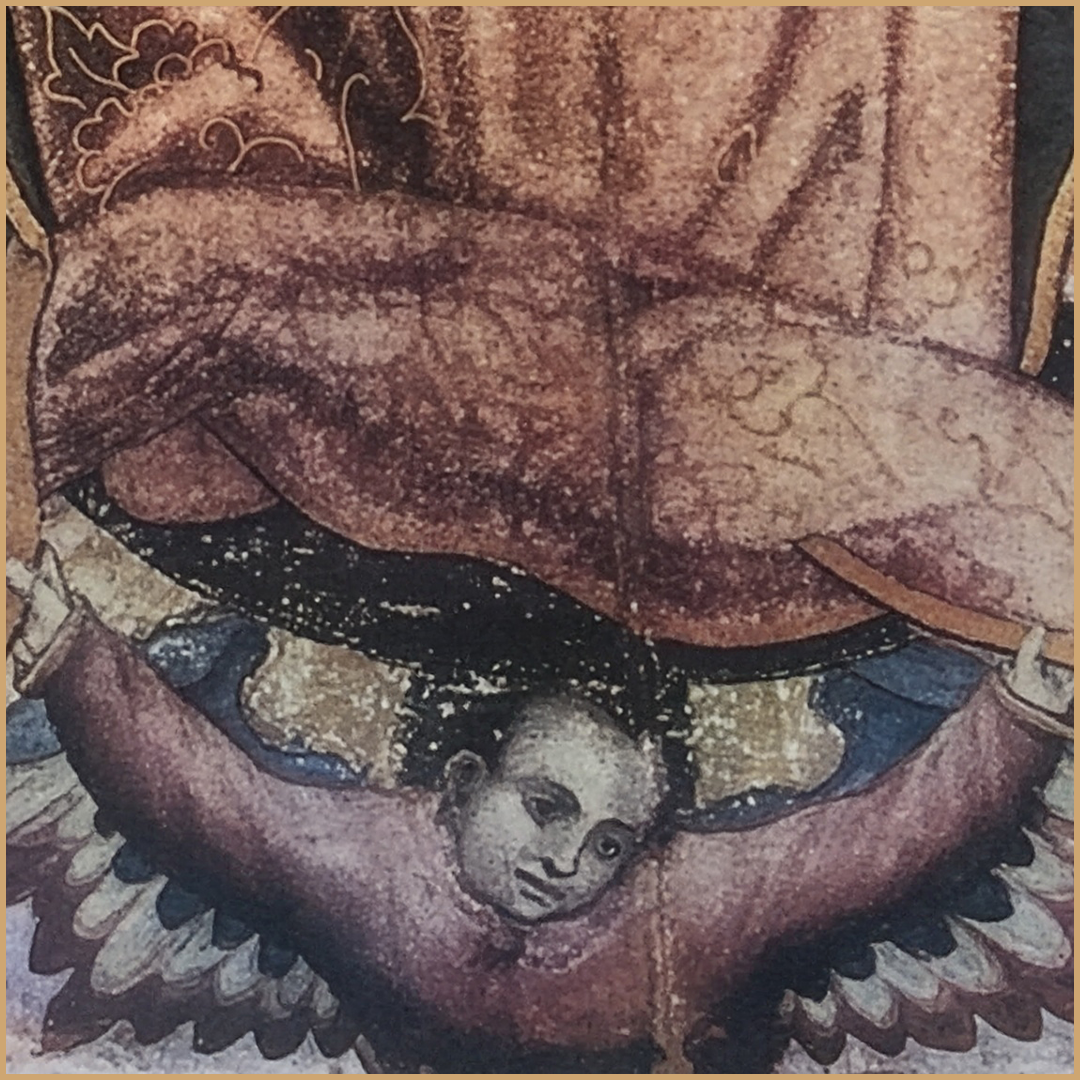
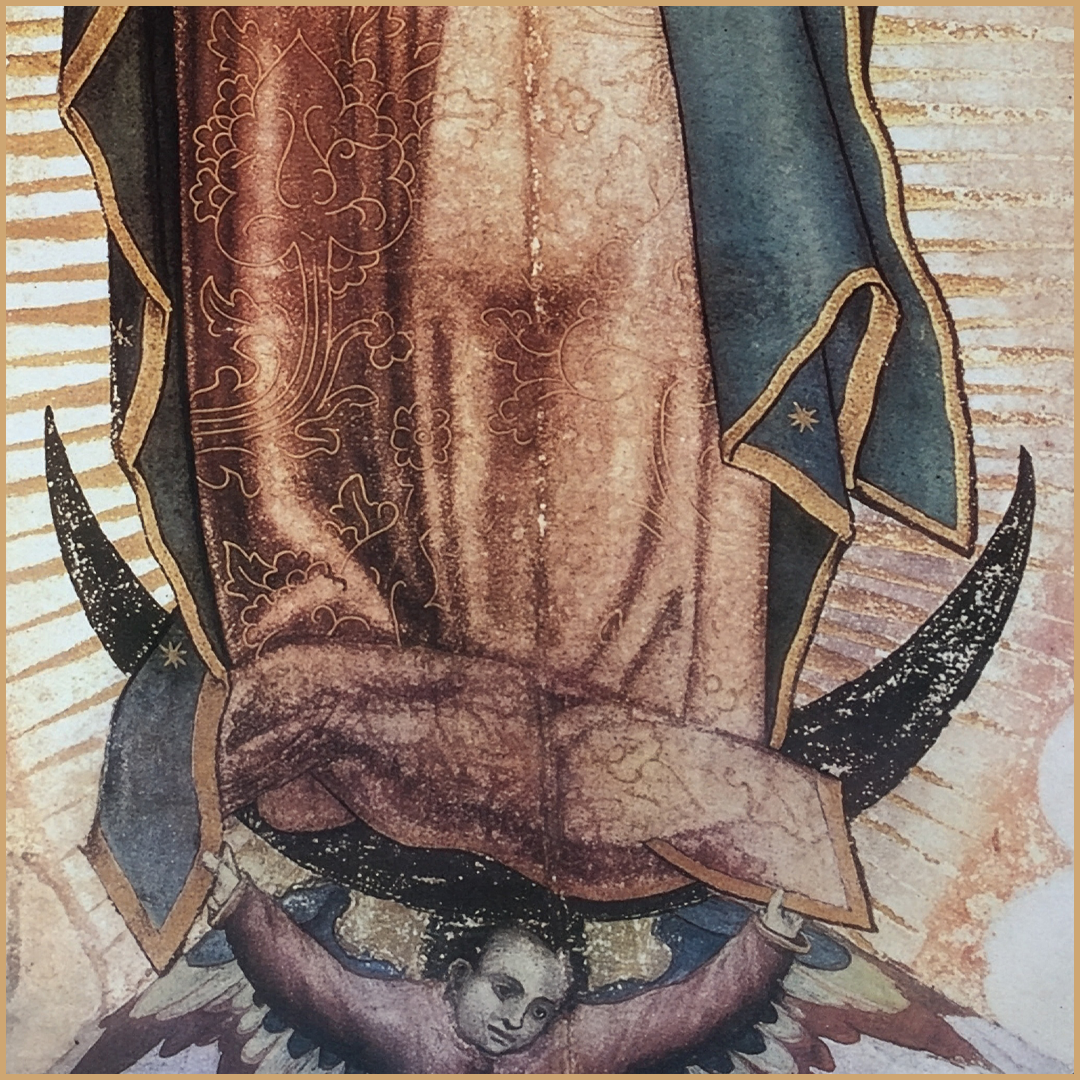
An angel with eagle's wings supports the Mother of God. The eagle was the "bird of the sun." Here the angel is the messenger of the Virgin. The angel wears both a tunic of the same color and a brooch like hers. The angel holds her mantle in one hand and the robe with the other, signifying the Son she bears is from both heaven and earth.


Our Lady stands in front of the sun. The sun symbol­ized the greatest Aztec god - Huitzilopochtli. She announces the God who is greater than their sun god.

The 4-petaled flowers with leaves on her tunic symbolize to the Aztecs that the fifth-age, the Age of Peace, has begun.

The Virgin of Guadalupe is shown among the clouds, representing her divine origin.

Her hands are joined in prayer and, therefore, she is not God but clearly there is one greater than she, and she points her finger to the cross on her brooch.

Our Lady stands on the moon. The cres­cent moon symbolized the Aztec god Quetzalcoatl, the feathered serpent moon god. She has clearly crushed and defeat­ed him. The Virgin's shoe, which appears over the moon, has no color, but is simply the raw tilma. This is inexplicable.

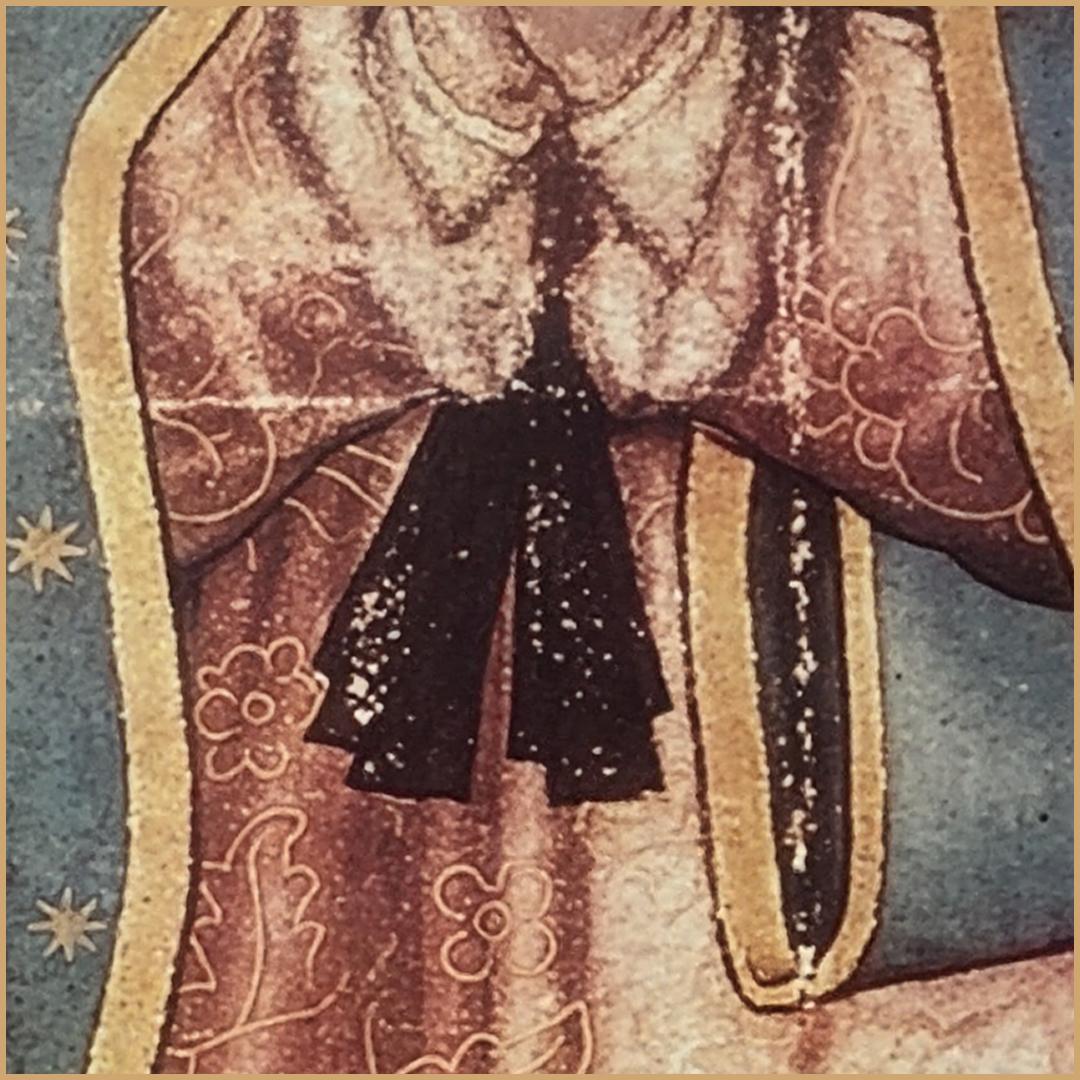
The image of Our Lady of Guadalupe depicts a dark ribbon above her womb, indicating that she is a woman anticipating the birth of God's only Son. The Spanish expression is encinta, "adorned with ribbon."

In the center of her tunic, overlying her womb, is a four petal jasmine flower which is the sign of the Divine and the center of the cosmic order to the Aztec. The Virgin's Baby, Jesus, is Divine and the true center of the universe.

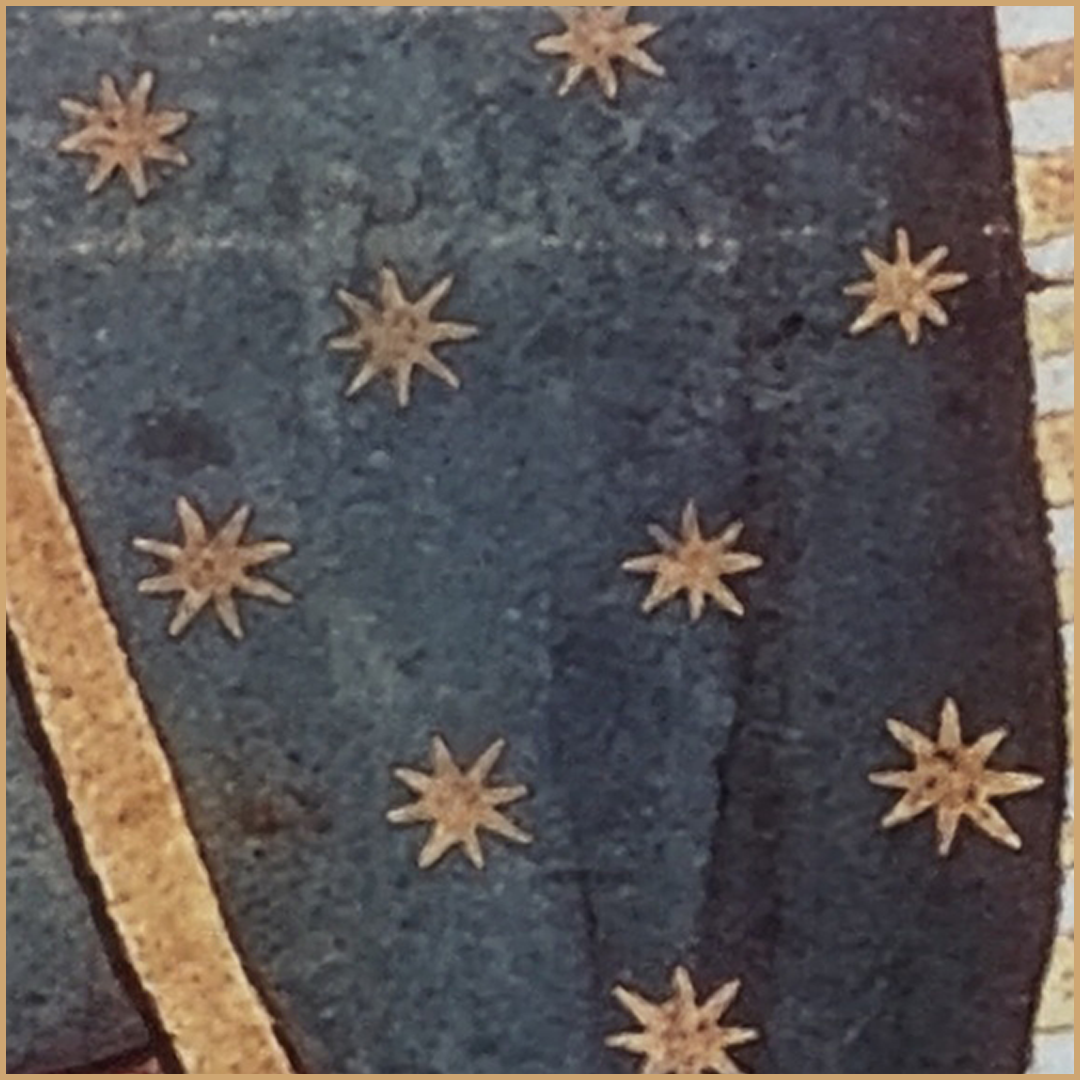
The stars on her mantle signify she comes from heaven - the Queen of Heaven. The constellations are in the exact position as appeared before dawn on the morning of December 12, 1531.
Entrust Your Petitions to Our Lady of Guadalupe

Entrust Your Petitions to Our Lady of Guadalupe

Journeying Together: 1 Million Rosaries

Journeying Together:

1 Million Rosaries

We invite you to join us as a community in praying the Holy Rosary to Our Blessed Mother,
as we work together toward the goal of one million rosaries by the year 2031.

Every person who prays the Rosary, whether in a group or individually, counts as one more Rosary toward our goal.

0 Rosaries completed